Designing a Ramadan Kareem Cover Banner with 3D Text: A Practical Guide for Content Creators
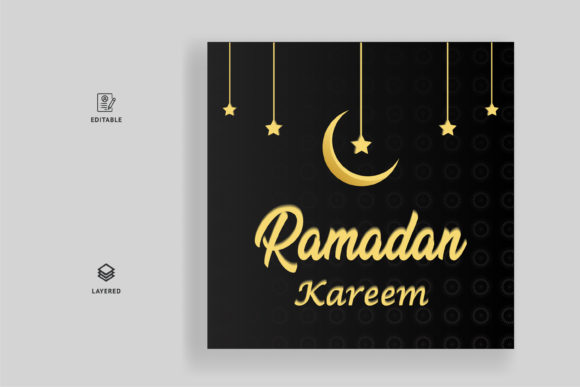
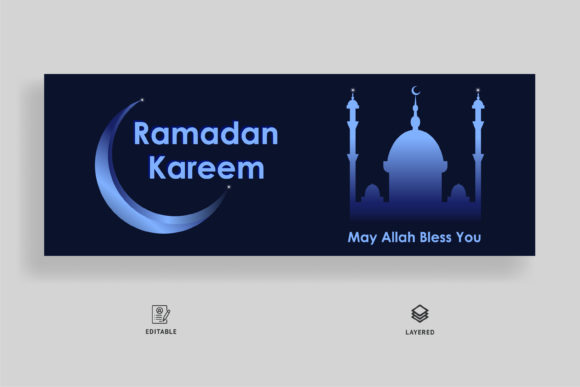
Ramadan is a season of reflection, community, and connection. For content creators, marketers, and small business owners, it is also a time when visual communication takes center stage. A Ramadan Kareem Cover Banner with 3D Text is a specialized graphic asset designed to convey the spirit of the holy month while delivering a modern, polished look. Unlike standard flat banners, the three-dimensional text adds depth and visual hierarchy, making the message stand out on social media pages, websites, email headers, or printed materials.
This article walks through what this banner type entails, how it fits into real workflows, and how you can use it effectively before, during, and after Ramadan campaigns. The focus is on practical integration—not just design theory.
What a Ramadan Kareem Cover Banner with 3D Text Brings to the Table
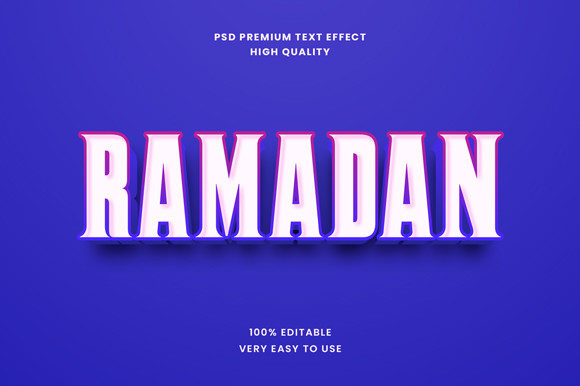
At its core, a cover banner with 3D text is a composite graphic that combines a thematic background—often featuring crescent moons, lanterns, geometric patterns, or soft gradients—with dimensional text that reads "Ramadan Kareem" or a similar greeting. The 3D effect is achieved through techniques such as beveling, extrusion, shadow layering, or gradient mapping within design software like Adobe Photoshop, Illustrator, Canva, or Blender.
This banner is not merely decorative. It serves as a focal point for branding during Ramadan. When placed on a Facebook page cover, an Instagram highlight, a website hero section, or an email newsletter header, it immediately communicates the occasion and sets the tone for the content that follows. For entrepreneurs and educators who publish Ramadan-themed content, a well-designed banner can increase engagement by making the page visually cohesive and seasonally relevant.
Where This Banner Fits in a Broader Workflow
Understanding the lifecycle of a campaign helps you decide when and how to deploy a Ramadan Kareem Cover Banner with 3D Text. It is not an isolated asset; it interacts with your content calendar, brand guidelines, platform specifications, and audience expectations.
Before the Campaign: Planning and Asset Preparation
In the planning phase, the banner acts as a visual anchor. Before you write a single social media post or schedule an email, you define the look and feel of your Ramadan content. The 3D text element forces you to consider color contrast, readability, and text placement early. This prevents last-minute design tweaks. For example, if you plan to use the banner across Instagram, LinkedIn, and your website, you need to prepare multiple aspect ratios while keeping the 3D text legible at different sizes. Planning ahead also means sourcing the right fonts—selecting a typeface that supports Arabic script gracefully if you are writing "Ramadan Kareem" in Arabic, or pairing English text with complementary decorative elements.
During the Campaign: Consistent Brand Presence
Once Ramadan begins, the banner becomes a recurring touchpoint. You might use it on your Facebook page cover throughout the month, but you can also repurpose it as a static image in video introductions, as a background for quote cards, or as a section divider in a blog post about Ramadan tips. The 3D text gives the asset a premium feel that works well in digital environments where users scroll quickly. The depth effect catches attention without being distracting. If you are running a promotion—such as a Ramadan sale or a charity drive—the banner can anchor the landing page and reinforce the campaign message.
After the Campaign: Repurposing and Archiving
After Ramadan ends, the banner does not disappear. You can archive it as a template for future years, swapping out the year or specific details. If the design is modular—meaning the background and text are on separate layers—you can update the greeting for other Islamic occasions like Eid al-Fitr or Eid al-Adha. This reuse saves time and maintains visual consistency across seasonal campaigns. For freelancers and small business owners, having a library of reusable assets reduces the overhead of starting from scratch each year.
Integration with Tools, Platforms, and Other Assets
Creating a Ramadan Kareem Cover Banner with 3D Text rarely happens in isolation. It interacts with your design software, your brand style guide, the platforms where you publish, and the other visual assets you use alongside it.
- Design Software: If you use Adobe Photoshop, the 3D text can be built using layer styles like bevel and emboss, drop shadow, and gradient overlay. In Canva, you can achieve a pseudo-3D effect by stacking multiple text layers with offset positioning and color variations. For advanced users, Blender allows true 3D extrusion with lighting and material textures. Choose the tool that matches your skill level and time budget.
- Platform Specifications: Different platforms require different banner dimensions. Facebook cover images are 851 x 315 pixels on desktop, while YouTube channel banners are 2560 x 1440 pixels. LinkedIn cover images are 1584 x 396 pixels. If your 3D text is complex, test how it renders at smaller sizes on mobile devices. Complex extrusions can become muddy if scaled down too much.
- Brand Consistency: The banner should align with your existing brand colors, typography, and visual tone. If your brand uses a minimalist aesthetic, a heavily ornate 3D text might clash. Conversely, if your brand is vibrant and modern, a bold 3D text effect can complement that energy. Keep your logo placement in mind—the banner should not compete with your logo but rather sit beneath it or to the side.
- Supporting Assets: The banner often appears alongside profile pictures, post images, and video thumbnails. Ensure that all these elements share a cohesive color palette and design language. For example, if the banner uses a deep teal background with gold 3D text, your post images could use teal borders or gold accents to create visual unity.
Practical Implementation Tips for Different Users
How you approach the banner depends on your role and resources. Below are workflow-oriented tips for three common user profiles.
For Marketers and Small Business Owners
Prioritize speed and consistency. Use a template-based approach where you customize a pre-designed banner rather than building from scratch. Many stock asset platforms offer editable PSD or Canva templates for Ramadan banners with 3D text. Replace the placeholder text with your own greeting, adjust the colors to match your brand, and export in the required sizes. Keep a folder with the master file and all exported variants labeled by platform and year. This makes next year's update a five-minute task instead of a multi-hour project.
For Freelance Designers and Creatives
Focus on craftsmanship and modularity. Build the banner with fully editable layers, naming each element clearly. Use smart objects for the background so you can swap them easily. For the 3D text, keep the text layer editable rather than rasterizing it, in case the client requests changes. Provide the client with multiple format options: one for web (RGB, 72 DPI) and one for print (CMYK, 300 DPI). If the client plans to use the banner across different languages, prepare separate text layers for Arabic and English versions.
For Educators and Bloggers
Keep readability and accessibility front of mind. 3D text can sometimes reduce legibility, especially on small screens. Use a bold, clear typeface and limit the extrusion depth so the text remains sharp. Test the banner against a contrasting background—light text on a dark background or dark text on a light background works best. If you embed the banner in a blog post, add appropriate alt text describing the banner and its message. This helps with SEO and accessibility.
Quality Control and Long-Term Use
Before finalizing your banner, run through a simple quality checklist.
- Readability: Is the 3D text legible at the smallest size it will be displayed? Zoom out to check.
- File Size: For web use, keep the file size under 200 KB without sacrificing quality. Use JPEG for photographs or complex backgrounds, and PNG for graphics with transparency.
- Spelling and Alignment: Double-check the greeting for correct spelling and proper kerning, especially if using Arabic script where letter forms change based on position.
- Export Consistency: If you are exporting multiple versions, use the same export settings to avoid color shifts between platforms.
For long-term use, store your master files in a cloud service with version control. Label them clearly, for example: Ramadan_Cover_2026_Master.psd. When you revisit the asset next year, you will know exactly where to edit the year or update the greeting. If you work with a team, create a shared drive with a style guide that documents the fonts, colors, and effects used in the banner. This ensures that anyone on the team can recreate or modify the asset without guesswork.
Observing Workflow Efficiency and Consistency
One of the most overlooked aspects of using a Ramadan Kareem Cover Banner with 3D Text is how it affects your overall production pipeline. When you have a well-designed banner ready before Ramadan begins, you eliminate the friction of designing under deadline pressure. You can focus your energy on creating supporting content—articles, videos, social posts—that align with the visual identity the banner establishes.
Consistency also builds trust with your audience. When a visitor lands on your Facebook page or website and sees a polished, seasonally appropriate banner with dimensional text, it signals that you are organized and attentive to detail. This is especially important for small business owners and entrepreneurs who rely on perceived professionalism to convert visitors into customers.
Bringing It All Together
A Ramadan Kareem Cover Banner with 3D Text is more than a decorative graphic. It is a strategic asset that supports your pre-campaign planning, anchors your during-campaign presence, and provides a reusable template for future seasons. By integrating it thoughtfully into your workflow—selecting the right tools, preparing multiple formats, maintaining brand alignment, and planning for reuse—you save time, reduce stress, and deliver a cohesive visual experience for your audience.
Whether you are a marketer managing a brand's social presence, a freelancer delivering assets to a client, or a blogger sharing Ramadan reflections, the principles remain the same: plan ahead, design for consistency, and keep the end use in mind. With these practices, your Ramadan Kareem cover banner will not only look good—it will work hard for your entire campaign.