Rose Wine Realistic Vector Product Ads: Evaluating a Targeted Design Resource for Visual Marketing
Product advertising in the beverage sector demands visuals that feel both polished and authentic. When the product is rose wine, the imagery must convey lightness, elegance, and seasonal appeal without drifting into the generic or the overly stylized. This is where Rose Wine Realistic Vector Product Ads enters the conversation as a specialized design asset. Rather than a broad collection of random wine graphics, this resource focuses specifically on realistic vector representations of rose wine products presented in advertisement-style layouts. For professionals who regularly produce marketing materials, social media content, or e-commerce visuals, understanding what this set offers and where it fits into a workflow matters more than a quick glance at sample images.
What Makes Rose Wine Realistic Vector Product Ads Distinct
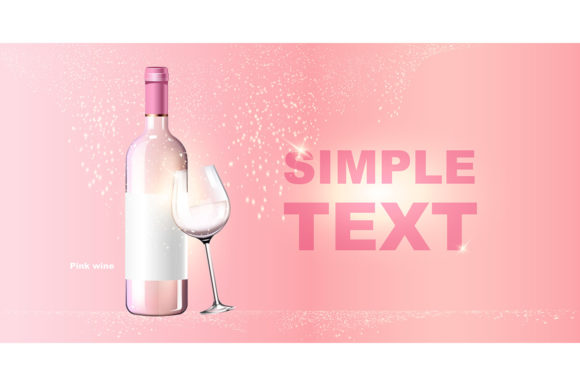
At its core, this collection provides vector-based scenes and components built around rose wine bottles, glasses, pouring sequences, and complementary elements such as fruits, ice cubes, and table settings. The emphasis on realism sets it apart from more illustrative or stylized wine graphics. Vectors maintain crisp edges and infinite scalability, which is particularly valuable when the same asset needs to appear on a business card, a billboard, or an Instagram story without losing detail or requiring re-creation.
The realistic approach means the lighting, reflections, glass transparency, and wine color aim to mimic photographic references. This reduces the time a designer would otherwise spend adjusting gradients, highlights, and shadow layers from scratch. For a marketer or small business owner who does not have access to a professional studio or a stock photography subscription with exact rose wine imagery, having ready-to-use vector advertisements can bridge a significant production gap.
Purpose and Intended Use Cases
The primary purpose of these assets is to accelerate the creation of product-focused advertising visuals. Common scenarios include:
- Social media campaigns for wineries, restaurants, or beverage brands launching a rose selection.
- E-commerce product pages where consistent, high-quality hero images are needed across multiple variants.
- Print materials such as menus, flyers, or in-store signage for seasonal promotions.
- Blog and editorial graphics for food and wine publications requiring placeholder or reference imagery.
Because the files are vector based, users can edit colors, resize components, swap backgrounds, or combine elements without degrading the image. This flexibility is especially useful when a brand needs to adapt a generic advertisement to match its specific color palette or layout constraints.
Scalability and Resolution Independence
One of the most practical strengths of Rose Wine Realistic Vector Product Ads is the vector format. Unlike raster images that pixelate when enlarged, vector graphics remain sharp at any size. For a publisher creating both a small thumbnail for a search result and a large banner for a trade show display, this eliminates the need to source multiple resolutions or rebuild assets. The time saved across a series of campaigns can be significant.
Realistic Detailing Without Photography Costs
Photographing rose wine well requires controlled lighting, proper glassware, professional staging, and often a photographer experienced with reflective surfaces and liquid dynamics. Realistic vector ads approximate that look while removing the logistical overhead. The glass reflections, liquid gradients, and condensation effects in these vectors are prebuilt, so a user can place a bottle shot onto a background in minutes rather than scheduling a shoot. For a freelancer or small business owner working on a tight deadline, this can mean the difference between meeting a launch date and missing it.
Editable Components and Customization
Most vector sets in this category come with organized layers. Label areas, bottle shapes, glass types, and decorative elements can be individually selected and modified. A marketer testing different label designs for a new rose variant can swap colors or text without redrawing the bottle. This level of control supports rapid iteration during creative reviews, and it allows a single asset to serve multiple brand expressions.
For In-House Marketing Teams and Brand Managers
Teams handling multiple product lines or seasonal launches can use this resource to maintain visual consistency. When every advertisement needs to feature the same bottle shape and similar lighting, starting from a uniform vector template ensures that the final images align with brand guidelines. The main limitation is that the set may not include every bottle variant or glass style a brand uses. However, with vector editing skills, users can adapt existing elements to new forms.
For Freelance Designers and Creative Agencies
Freelancers who take on hospitality or beverage clients often face tight budgets for photography. Having a reliable set of realistic rose wine vectors allows them to present professional-looking mockups during pitch phases or early concept development. The client can see how a campaign might look without the expense of a full photoshoot. Once the concept is approved, the same vectors can serve as production assets or be replaced with original photography later. This dual use makes the resource a practical investment for agency workflows.
For Small Business Owners and Entrepreneurs
A small vineyard, a wine bar, or an online retailer may lack the budget for a dedicated designer or a photoshoot. Ready-made vector ads can be customized with the business name, logo, and specific product details using basic vector editing software. The realistic style helps the final output appear professional rather than homemade. The trade-off is that the visuals will not be unique to the brand in the same way a custom photoshoot would be. For businesses operating in a market where speed and cost efficiency are priorities, this resource offers a strong balance between quality and accessibility.
How the Assets Hold Up Under Scrutiny
When evaluating any vector product ad set, the key indicators of quality are the accuracy of reflections, the natural appearance of liquids, and the structural proportions of bottles and glasses. In Rose Wine Realistic Vector Product Ads, the stronger sets include subtle gradients that mimic light passing through pink wine, transparent glass edges with appropriate refraction, and shadows that ground the product in a scene. Weaker implementations may use flat fills or overly uniform gradients that look artificial when printed at large sizes. Users should preview the assets at 100% scale in a vector editor before committing to a purchase or download. Most reputable sellers provide detailed previews that reveal the layer structure and the level of detail in the reflections.
Usability Across Software Platforms
These vectors typically come in formats such as AI, EPS, SVG, or PDF. Compatibility with Adobe Illustrator, Affinity Designer, CorelDRAW, or even web-based editors like Figma or Canva depends on the file format chosen. SVG files generally offer the widest cross-platform compatibility, while AI and EPS preserve more layer structure for advanced editing. Users should verify format support within their existing tools. A set that works seamlessly in one application may lose layer organization when opened in another, so testing a sample file is advisable.
Reliability for Repeated Use
For a marketing team that will reuse an asset across dozens of campaigns, the consistency of the vector construction becomes important. Assets built with clean geometry and sensible layer naming allow multiple designers to work on the same file without confusion. If the set includes multiple scenes, checking whether the lighting direction and perspective remain consistent across all files helps avoid mismatched composites. A well-structured set can serve as a reusable library for months or years, making the upfront cost negligible compared to the time saved.
Long-Term Value and Practical Recommendations
The long-term value of Rose Wine Realistic Vector Product Ads depends largely on how frequently the user creates rose wine-related content. For a seasonal campaign that runs once, the cost may be justified by the speed of execution. For an agency that services multiple wine brands throughout the year, the set becomes a baseline asset that reduces repetitive design work. The main limitation is that trends in bottle shapes, label designs, and advertising aesthetics evolve. A set purchased today may feel dated in three or four years, especially if the vectors include stylistic effects tied to current design trends. Choosing a set with a relatively neutral, timeless visual style can extend its useful life.
Who Benefits Most
- Marketing teams launching seasonal rose wine campaigns with tight deadlines.
- Freelance designers who need professional mockups for client presentations.
- Small business owners in the wine or hospitality industry who produce their own marketing materials.
- E-commerce managers requiring consistent product imagery across multiple platforms.
- Publishers and bloggers covering wine reviews, food pairings, or lifestyle content who need high-quality visual placeholders.
Who May Find It Less Suitable
Brands that require completely original, location-specific photography for high-end marketing campaigns may find vector assets too generic for their needs. Similarly, users who lack access to vector editing software or the skills to modify layers will get limited value from the set, as the files require some level of manipulation to match a specific brand identity. In those cases, a stock photography subscription or a custom photoshoot may be a better fit.
Final Observations on Practical Fit
Rose Wine Realistic Vector Product Ads occupy a useful middle ground between generic clip art and custom photography. They offer a realistic aesthetic that supports professional advertising without the logistical demands of a studio shoot. For professionals who produce visual content regularly and need a reliable starting point for rose wine promotions, this resource can streamline production and maintain a consistent level of quality across channels. The decision to invest comes down to the frequency of need, the editing capabilities of the user, and whether the specific scenes in the set align with the brand's visual direction. When those factors align, the vector ads become a practical tool rather than just another design download.