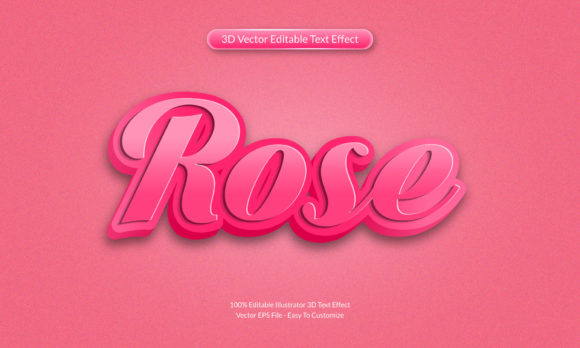
The Art of Beauty 3D Editable Text Effect Design: From Concept to Application
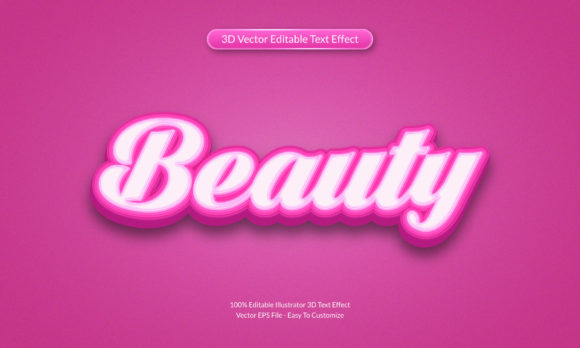
When a beauty brand places its name on a product label, website hero image, or social media post, that typography must convey more than just letters. It needs to communicate luxury, precision, and an almost tactile sense of quality. This is where a Beauty 3D Editable Text Effect Design becomes an essential tool for designers, marketers, and brand owners. Unlike static 3D renders that require re-rendering for every change, an editable text effect allows for rapid iteration, consistent branding, and creative flexibility.
Today’s beauty landscape spans skincare, cosmetics, fragrances, and wellness products, each with its own visual language. An editable 3D text effect bridges the gap between high-end visual impact and practical design workflow. Whether you are a freelance graphic artist crafting a logo for an organic lip balm startup or a creative director overseeing a global perfume campaign, understanding the nuances of this design approach can elevate your typography from flat to dimensional.
Understanding the Core Components of a Beauty 3D Text Effect
At its essence, a beauty 3D editable text effect combines depth simulation, lighting, material properties, and shadow behavior in a way that remains adjustable. Designers often build these effects using layer styles in software like Adobe Photoshop or Illustrator, or through specialized 3D tools that export as smart objects. The key components include:
- Bevel and Extrusion Depth: The edges of the letters are given a sculpted look. For beauty brands, subtle bevels mirror the soft curves of a bottle or the smoothness of a cream. Deep extrusions can mimic cut crystal or metallic accents.
- Lighting and Reflections: Directional light sources create highlights that mimic studio photography. A single overhead light with a gentle wrap-around effect is common for a clean, luxurious aesthetic. Multiple lights can simulate a glowing or iridescent finish.
- Material Appearance: The text can look like polished chrome, frosted glass, liquid pearl, or matte ceramic. Each material conveys a different brand personality. An editable effect allows switching between gold, rose gold, or white pearl without rebuilding.
- Drop Shadows and Ambient Occlusion: Realistic shadows give the text a floating or grounded presence. Soft, blurred shadows under the letters suggest a soft surface, while hard shadows imply a solid base.
- Contour and Texture Mapping: Some effects incorporate subtle gradient maps or pattern overlays that wrap around the 3D form, adding a textile or marble feel. Because the effect is editable, these maps can be updated as brand elements evolve.
Why Editability Matters in Brand Workflows
In a fast-paced design environment, a non-destructive, layered approach is crucial. An editable text effect saves time when a client decides to change the brand color from sapphire to teal, or when a campaign slogan shifts from “Glow Inside Out” to “Radiant Confidence.” With a Beauty 3D Editable Text Effect Design, the designer adjusts a few sliders or replaces a gradient stop, and the entire text updates consistently across all assets. This preserves the lighting, depth, and material feel, ensuring no drop in quality. Furthermore, team collaboration becomes smoother—multiple designers can open the same smart object, adjust font or wording, and the 3D appearance remains intact.
From a practical standpoint, editable effects also reduce file sizes compared to fully rendered 3D geometry. They are compatible with standard design software, making them accessible to studios without dedicated 3D departments. For a small beauty brand managed by a solo entrepreneur, this means professional-grade typography without needing a rendering farm.
Real-World Applications Across Beauty Niches
The versatility of beauty 3D editable text effect design allows it to be adapted across various segments of the industry. Each niche leverages the effect differently to align with its target audience.
Luxury Skincare Branding
Premium skincare lines often use minimalist packaging with metallic or frosted glass accents. A 3D text effect in a refined silver or champagne finish sits elegantly on a white background, evoking purity and efficacy. The editable nature means the same effect can be used for product names (e.g., “Youth Renewal Serum”) on a website banner, then tweaked for a limited-edition “Night Repair” variant by simply changing the text layer. The bevel depth might be reduced for a more delicate look, or the lighting angle adjusted to match a new packaging photograph.
Cosmetics and Makeup Campaigns
Makeup brands thrive on vibrant color and bold statements. Here, a Beauty 3D Editable Text Effect Design can incorporate neon gradients, holographic shines, or glossy lacquer finishes. A lipstick brand may want the word “Matte Revolution” to appear as a glossy, raised 3D shape against a matte background, creating contrast that draws the eye. Because the effect is editable, the designer can test different shadow intensities or add a subtle glitter overlay without starting from scratch.
Fragrance and Perfume Labels
Fragrance packaging often relies on typography to convey a mood—elegance, romance, freshness. A 3D text effect with a soft inner glow and translucent edges can mimic the look of etched glass or a droplet of perfume. Brand names like “Floral Whisper” or “Ocean Essence” gain a sensory quality when the letters appear to float or glow. The ability to quickly change the color of the light source (e.g., from warm gold to cool lavender) allows seasonal or product-line variations without redoing the entire design.
Beauty Tech and E-Commerce
For beauty subscription boxes, apps, and e-commerce platforms, 3D text effects enhance user interfaces. A call-to-action button reading “Try Now” in a subtle 3D embossed style increases clickability. Editable effects allow UI designers to maintain a consistent 3D aesthetic across multiple screens while updating text strings for A/B testing.
Technical Considerations for Designers
Creating and maintaining a Beauty 3D Editable Text Effect Design requires attention to several technical factors. First, the software choice influences the degree of editability. Photoshop’s layer styles (bevel & emboss, contour, texture, satin, and gradient overlay) offer a fully editable, non-destructive way to achieve a 3D look. Illustrator’s 3D effects can be applied to text and then expanded into symbols for reuse. For more advanced control, tools like Adobe Dimension or Cinema 4D Lite allow for true 3D text that remains editable through linked files—though these require more experience.
Key parameters to master include:
- Lighting consistency: Ensure that the light angle in the text effect matches any rendered product images or scene background. A mismatch breaks the illusion.
- Resolution and anti-aliasing: 3D edges can produce jagged lines if not carefully anti-aliased. Use high-resolution settings and avoid excessive compression when exporting for web.
- Font selection: Sans-serif fonts with clean curves (e.g., a geometric or humanist sans) generally work best for 3D effects because their uniform stroke widths handle bevels predictably. Thin serifs or overly decorative fonts may lose readability when depth is applied.
- Color gamut and brand guidelines: If the effect uses metallic gradients, ensure the colors fall within the brand’s approved palette. Editable effects make it easy to enforce color consistency by linking gradient swatches to global brand colors.
- File organization: Use smart objects or layer comps to keep versions manageable. Name layers clearly (e.g., “Gold Effect Base,” “Shadow Group”) so that another designer can step in.
Balancing Realism with Readability
One common challenge is preserving legibility. Overly deep bevels or strong specular highlights can obscure letterforms, especially at smaller sizes. A practical rule is to test the effect at the smallest intended display size—whether that’s a 48px mobile headline or a 36pt product label. Adjust the bevel depth and highlight intensity until each letter remains distinct. Softening the shadow and reducing the extrusion height often solves readability issues without sacrificing the 3D feel.
Common Pitfalls and How to Avoid Them
Even experienced designers can fall into traps when crafting beauty 3D editable text effect design. Awareness of these pitfalls leads to stronger results.
- Overcomplicating the effect: Adding too many layers (multiple bevels, reflections, textures) can make the text look cluttered and artificial. Start simple: a base bevel, one light source, and a subtle shadow. Build complexity only if the brand aesthetic calls for it.
- Ignoring context: A 3D text effect that looks stunning on a dark studio background may clash when placed on a packaging mockup with natural lighting. Always test the effect against the actual background it will sit on. Use editable color overlays to adapt the metal reflection to the environment.
- Forgetting about file portability: Some editable effects rely on proprietary layer styles or filters that may not render correctly in different software versions. When sharing with clients or team members, provide a detailed style guide or flatten the text into a high-resolution image as a fallback.
- Inconsistent use across media: If a brand uses a 3D text effect on its website but a flat, 2D version in print materials, the identity feels disjointed. Editable effects allow the same style to be applied to print-ready files (e.g., converting the 3D layer to a vector or smart object) so the look is consistent.
The Future of Editable 3D Typography in Beauty
As augmented reality (AR) and personalized beauty experiences expand, the demand for flexible, adaptive 3D typography will grow. A Beauty 3D Editable Text Effect Design can be integrated into AR filters where the brand name appears to float in the user’s environment, with lighting that adjusts to real-world surroundings. The editable aspect means that the effect can be updated to reflect seasonal campaigns or user-generated content prompts.
Moreover, advances in variable fonts and responsive design will likely merge with editable 3D effects. Imagine a text effect that automatically adjusts its bevel depth based on the viewing device’s screen size, or a gradient that shifts hue when the user scrolls. Designers who master the foundational principles of editable 3D typography today will be well-prepared to incorporate these interactive elements tomorrow.
Whether you are creating a logo for a new organic cosmetic line or refreshing an established fragrance website, the ability to apply and modify a beauty 3D editable text effect design efficiently is a powerful asset. It combines the visual impact of dimensional typography with the practicality required for modern brand workflows. By understanding the components, applications, technical nuances, and potential missteps, you can produce text that not only looks beautiful but also serves the strategic goals of the brand.