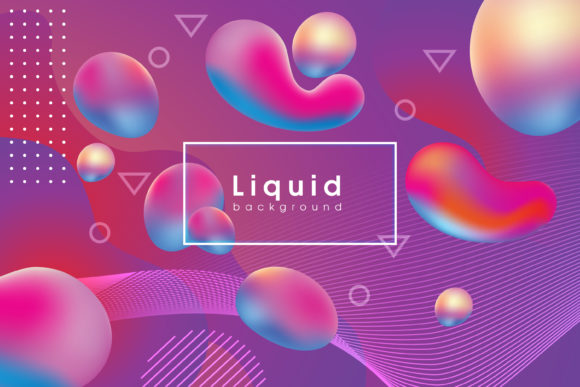
Why 3D Fluid Liquid Background Design Is Reshaping Digital Visual Language
In an era where digital attention spans are measured in milliseconds, the visual environment of a website, application, or brand interface has become a decisive factor in user engagement. Among the emerging design techniques gaining traction across industries, 3D Fluid Liquid Background Design stands out as a compelling fusion of art, technology, and psychology. This approach replaces static or conventionally animated backgrounds with dynamic, flowing, three-dimensional liquid forms that respond to user interaction, scroll behavior, or ambient data signals. It is not merely a decorative trend; it is a response to deeper shifts in how audiences perceive digital spaces, how brands differentiate themselves, and how creators balance aesthetic ambition with performance realities.
Understanding 3D Fluid Liquid Background Design in Context
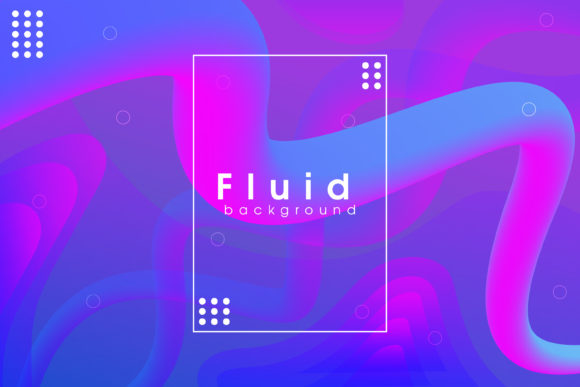
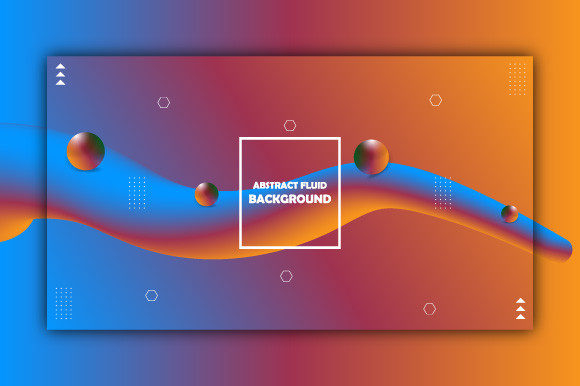
At its core, 3D Fluid Liquid Background Design refers to the use of real-time or pre-rendered fluid simulations that exhibit three-dimensional depth, organic movement, and often interactive responsiveness. Unlike traditional gradient backgrounds or static imagery, these fluid forms behave like actual liquids—rippling, swirling, blending, and reshaping continuously. The effect is achieved through GPU-accelerated particle systems, mathematical fluid dynamics algorithms, or WebGL-based rendering pipelines that run natively in modern browsers or app environments.
The technique sits at the intersection of several established design disciplines: motion design, data visualization, generative art, and user interface design. It draws from the visual language of liquid dynamics found in nature—water currents, smoke plumes, ink dispersions—while leveraging computational power to make those forms interactive and context-aware. For professionals and creators, understanding this design approach requires moving beyond "it looks cool" to recognizing how it functions as a communication tool, a brand signal, and a psychological anchor in digital experiences.
Broader Trends Making 3D Fluid Liquid Background Design Relevant
The rise of 3D Fluid Liquid Background Design is not happening in isolation. It aligns with several converging developments across technology, consumer expectations, and creative practice.
The Shift from Static to Living Interfaces
Users today expect digital environments to feel alive. Static pages convey rigidity, while subtle or dramatic movement signals that a platform is attentive, modern, and engaged. This expectation is driven by years of exposure to immersive media—from cinema to gaming to social media filters—where the visual field is rarely still. 3D Fluid Liquid Background Design satisfies this expectation by introducing organic, non-repeating motion that mimics the natural world. Unlike looping animations that become predictable after a few seconds, fluid systems generate novel configurations continuously, keeping the visual experience fresh even during extended sessions.
Differentiation in a Saturated Visual Economy
As design tools become more accessible, the baseline quality of digital visuals has risen dramatically. A polished minimalist layout no longer guarantees distinction. Brands, agencies, and independent creators are searching for visual signatures that cannot be easily replicated with templates or stock assets. 3D Fluid Liquid Background Design offers a degree of uniqueness because each implementation is governed by its own parameters—color palettes, flow speeds, interaction triggers, and particle behaviors. Two brands using the same underlying technology can produce radically different visual identities, making this approach a genuine differentiator rather than a cosmetic overlay.
Performance Optimizations Enable Wider Adoption
Historically, fluid simulations were the domain of high-end visual effects studios with dedicated render farms. Today, WebGL, WebGPU, and GPU-accelerated CSS make real-time fluid rendering possible on mid-range laptops and mobile devices. The maturation of libraries such as Three.js, p5.js, and specialized fluid simulation frameworks has lowered the technical barrier. For marketers and entrepreneurs, this means that 3D Fluid Liquid Background Design is no longer reserved for major brand campaigns or experimental art installations; it is practical for product landing pages, SaaS dashboards, portfolio sites, and e-commerce experiences.
Why People Are Paying Attention: Psychology and Perception
The attention that 3D Fluid Liquid Background Design receives is not merely aesthetic. It taps into fundamental perceptual and psychological mechanisms that influence how audiences evaluate digital experiences.
Fluidity as a Cognitive Signal
Human beings are wired to attend to motion, especially organic motion. Our visual systems evolved to detect changes in the environment that might indicate opportunity or threat. Fluid motion, in particular, activates areas of the brain associated with calmness and curiosity rather than alarm. When a background flows smoothly and responds to cursor movement or scroll depth, it signals that the system is responsive, intelligent, and attuned to the user's presence. This creates an implicit sense of control and feedback that static designs cannot provide.
Emotional Resonance and Brand Recall
Color and motion together form a powerful mnemonic combination. Brands that use 3D Fluid Liquid Background Design often report higher recall and emotional association in user testing. The fluid forms can be tuned to match brand personalities: turbulent and fast-moving for energetic brands, slow and undulating for wellness or luxury, color-shifting for creative or tech-forward identities. Because the motion is continuous and non-repeating, users encounter a slightly different visual each time they visit, which reinforces curiosity and revisitation.
Accessibility and Inclusivity Considerations
One of the more thoughtful reasons professionals are adopting this technique is its potential for accessibility. Unlike video backgrounds that may contain distracting or overwhelming content, fluid forms can be designed with reduced motion preferences in mind. They can also be used sonically—some implementations map fluid parameters to audio cues, creating multisensory experiences for users with visual impairments. When implemented responsibly, 3D Fluid Liquid Background Design can enhance rather than hinder inclusive design practices, provided that performance budgets and reduced-motion media queries are respected.
Changing Workflows and Expectations for Creators and Teams
The adoption of 3D Fluid Liquid Background Design is reshaping how design teams conceptualize, prototype, and deliver digital products. This is not a simple plug-and-play addition; it requires shifts in workflow, skill sets, and collaboration patterns.
From Static Comps to Real-Time Prototyping
Traditional design tools like Figma or Sketch are excellent for static layouts but limited in their ability to simulate fluid dynamics. Teams adopting 3D Fluid Liquid Background Design increasingly need to prototype directly in the browser or in 3D authoring tools like Blender, Houdini, or TouchDesigner. This shifts the design process from "compose then export" to "configure then iterate." Freelancers and small studios that invest in these tools gain a competitive edge because they can demonstrate working prototypes early in the client engagement cycle, rather than relying on static mockups that fail to convey the fluid experience.
Collaboration with Developers Becomes More Integrated
For marketers and entrepreneurs managing creative teams, one of the practical implications is that designers and developers must collaborate more closely. The fluid parameters—flow velocity, particle count, color gradients, interaction zones—are often tuned through code rather than visual sliders. This blurs the line between design and development, encouraging cross-functional skill development. Professionals who understand both the aesthetic and technical dimensions of 3D Fluid Liquid Background Design are increasingly valued as hybrid contributors.
Performance Budgeting as a Design Constraint
A significant workflow change is the introduction of performance budgeting as a first-class design constraint. Fluid simulations can be computationally expensive, especially on mobile devices or older hardware. Designers must decide where the fluid effect appears, how large it is, how many particles it uses, and when it degrades gracefully. This forces a level of discipline that elevates the work beyond superficial decoration. The best implementations of 3D Fluid Liquid Background Design are those that feel immersive but run efficiently, and achieving that balance requires intentional tradeoffs throughout the production pipeline.
Practical Examples and Observations Across Use Cases
To ground the discussion, it helps to examine how 3D Fluid Liquid Background Design functions in real-world contexts. These observations come from current implementations across various sectors.
Landing Pages and Brand Storytelling
A growing number of SaaS companies and creative agencies use fluid backgrounds on their hero sections to convey innovation and dynamism without relying on video loops or stock footage. For example, a fintech startup might use a slow, gold-and-teal fluid simulation that mirrors the movement of markets or data flows, creating an immediate association with intelligence and liquidity. The effect is subtle enough not to distract from the call-to-action but distinctive enough to differentiate from competitors using static hero images.
Product Demonstrations and Interactive Narratives
Some e-commerce and product design sites embed 3D Fluid Liquid Background Design in product detail pages, where the fluid responds to color swatches or product variants. When a user selects a different product color, the fluid background shifts to a complementary palette, reinforcing the visual identity of the selection. This creates a cohesive, almost synesthetic experience that strengthens product association and encourages exploration.
Event and Exhibition Microsites
Temporary campaigns—product launches, virtual events, art exhibitions—increasingly use fluid backgrounds to generate buzz and reflect the ephemeral nature of the event. Because fluid simulations produce unique visuals each time, visitors to a campaign site have a personalized micro-experience, which can be shared on social media as a dynamic screenshot or screen recording. This user-generated amplification is a measurable outcome that marketers can track.
Ambient Backgrounds in Productivity and Wellness Applications
In lifestyle and productivity software, 3D Fluid Liquid Background Design is used to create calming, distraction-reducing environments. Meditation apps, focus timers, and journaling platforms leverage slow, pastel-toned fluid motion to induce relaxation and reduce cognitive load. Here, the fluid is not a branding element but a functional tool for modulating user state. This application speaks to a broader trend of digital environments that prioritize mental well-being alongside task completion.
Connecting to Larger Developments in Technology and Culture
The relevance of 3D Fluid Liquid Background Design extends beyond design trends. It connects to several larger movements that professionals should be aware of.
The Rise of Generative and Procedural Content
There is a broader shift toward generative design systems that produce unique content for each user interaction. Fluid backgrounds are one manifestation of this trend, which also includes procedurally generated textures, algorithmic typography, and adaptive layouts. As audiences become more attuned to personalization, the expectation that digital environments respond uniquely to each visit will grow. 3D Fluid Liquid Background Design fits naturally into this paradigm because its output is inherently variable.
Democratization of 3D and Real-Time Graphics
The technical infrastructure for real-time 3D graphics has become widely accessible through browser APIs and affordable GPUs. This democratization means that small teams and individual creators can produce visual effects that were once exclusive to large studios. For entrepreneurs and freelancers, this levels the playing field: a two-person studio can now deliver a brand experience that rivals that of a major agency, provided they understand how to leverage tools like WebGL and fluid simulation libraries.
Attention Economics and the Case for Meaningful Motion
In an environment saturated with notifications, banners, and auto-playing media, audiences have developed banner blindness and motion fatigue. The success of 3D Fluid Liquid Background Design depends on its restraint. When used judiciously—as a background that enhances rather than competes with content—it can capture attention without causing fatigue. This aligns with a larger cultural shift toward intentional, mindful design that respects the user's cognitive resources.
Looking Ahead Without Speculation
As of 2025, 3D Fluid Liquid Background Design has moved from experimental novelty to a recognized design capability with practical applications across industries. Its staying power will depend not on technological novelty but on how well practitioners integrate it into coherent visual systems that serve user needs and brand objectives. For professionals, creators, and marketers, the opportunity lies in understanding that this technique is not a shortcut to engagement but a sophisticated tool that requires thoughtful implementation, performance awareness, and contextual relevance.
The most effective uses of 3D Fluid Liquid Background Design are those that feel inevitable—where the fluid motion seems like the only natural choice for the brand's identity, the platform's purpose, and the user's expectations. When that alignment is achieved, the background stops being a feature and becomes part of the experience's foundation.